We are experts in the testing, diagnosing, dosing, flushing and cleaning of closed systems, Our staff can diagnose from a Chemical Test Certificate or by visiting site, taking samples, looking at the water condition and provide you a solution to your problem. These systems are often neglected but are expensive when run badly and very expensive when they go wrong.
A closed system is where the water is continually circulated in pipework through a building or facility and is occasionally topped up by a pressurisation unit.
Problems that can occur:
- Bacterial Growth – Sulphate-reducing bacteria (SRB’s) are anaerobic and form colonies in areas where there is low flow, they create biofilm and in this biofilm turn sulphates dissolved in the water into acid by-products that are corrosive, smelly and lower the pH of the water. The low pH will lead to further corrosion as the system literally eats it self. Nitrite-reducing bacteria are another form of anaerobic bacteria which will live off nitrites which many companies use as corrosion-inhibitors, thus they will eat the inhibitor and then corrode your system. Other bacteria that occur in closed systems are Pseudomonas, which will again form colonies, many of these bacteria will occur together. All bacterial growth will lower the pH
- Corrosion – Corrosion of a system can occur either by bacterial cause or chemical causes, or the chemical cause can be a result of bacterial growth. Low pH causes metals to be attacked and the typical signs of this will be pin holes, pitting where the acidity is attacking, joint failures. Products of corrosion will be present in the system as tiny pieces of metal and as these are pumped round they will hit the internal surfaces of pipework causing damage similar to continuous shot blasting, elbows are common failure points as are pumps. These products will also accumulate in smaller pipework and areas of low flow such as fan coils, radiators, Air handling units, and will eventually block them preventing them form working effectively.
- Scaling – In hard water areas hardness in the water will be deposited in areas of heating or heat transfer such as Boiler Heat Exchangers, Calorifier Coils, pool heat exchangers, in a closed system this isn’t usually a significant problem unless there are leaks and the system is constantly topping up, bringing more hard water into the system and depositing more hardness. This reduces the heat transfer and therefore increases the amount of energy used.
- Leaks – A leaking system can cause further problems as it will slowly replace the water in it reducing the amount of inhibitors, biocides and glycol that should be present. In hard water areas it will add more hardness and bring more bacteria into the system.
- Effects of problems – higher energy usage, leaking plant, failed joints/elbows, boiler/chiller failures,
All of these will lead to significant expense and interference in the normal operation of a facility.
Correct Operation:
- Chilled Systems – These should have sufficient inhibitor to keep the system alkaline and a corrosion inhibitor appropriate for the metals in the system. There should also be a biocide and usually Glycol to improve the chillers efficiency and prevent freezing during the winter when the systems are not in use. The Glycol levels should be 20% or higher by the volume of the system as if this will prevent bacterial growth, once the levels fall below 20% the glycol does not inhibit this and actually becomes food for the bacteria and can leave the system with the water smelling like vomit!
- Heating Systems – These should have sufficient inhibitor to keep the system alkaline and a corrosion inhibitor appropriate for the metals in the system and there should be a biocide to prevent bacterial growth during the summer when the system is less used.
- Testing – Systems should be tested every 6 months for pH alkalinity, iron, hardness, conductivity, inhibitor, glycol level, smell, visually. Remedial action should be taking according to the result.
Remedial Actions for Closed Systems:
- Dosing – if the system is showing parameters that are okay but there is low inhibitor, this should be dosed, according to the system size, if there is bacterial growth a biocide dosed.
- Flushing/Cleaning – If the water in the system is contaminated or showing signs of corrosion or blockages then the system will need to be flushed and cleaned
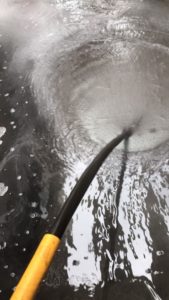
- Flushing – this consists of connecting a water supply to the closed system and opening drain points across the system and then injecting water at the same rate as it is taken out to maintain the system pressure. This allows contaminated water to be replaced and then the system can be dosed accordingly.
- Cleaning – If there are blockages and the system is dirty then after an initial flush a cleaner is added to the system Systemkleen NCR which will then mobilise deposits, sludge and blockages so they can be flushed out. Remove mild scaling where it is attached and suspend all of this allowing to be removed with a post clean flush. The cleaning chemical is usually left in the system for a few days to get round all the system and then flushed out as above, blocked areas will be back-flushed to remove fouling.
- Plant Replacement – When plant such as chillers or boilers is replaced the systems should be routinely cleaned, flushed and dosed to protect the new plant from damage.
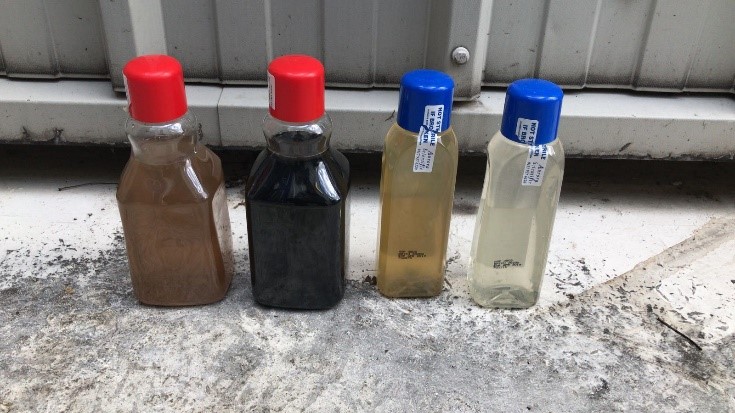 |
| Above, left to right: 1) After First flush before cleaner added. 2) after cleaner before flush. 3) near clear while flushing. 4) end of flush when inhibitor is added. |
 |
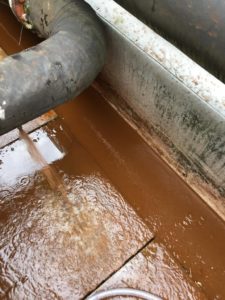 |
| Above: Dirty heating system being flushed. | Above: Dirty chiller system being flushed. |